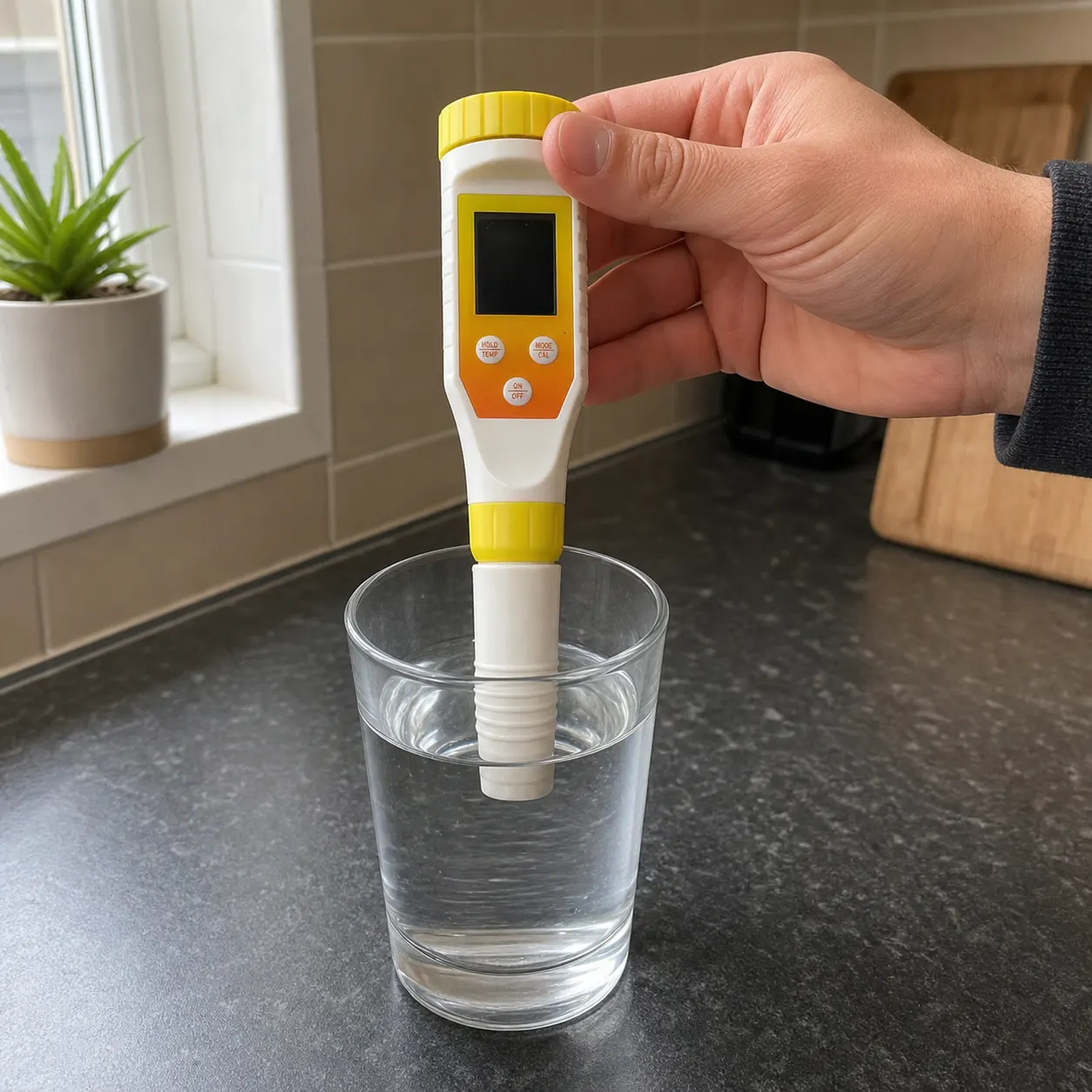
Short answer: An aquarium water test meter is useful only when its listed readings match the aquarium decision in front of you. Waterquali identifies the YY-1066C as a water quality rapid analyser with pH, total hardness and salinity test items, powered by four LR44 cells. The page does not specify accuracy, calibration, measurement ranges or aquarium compatibility, and it does not claim to test ammonia, nitrite or nitrate. Treat it as a narrow screening tool: compare relevant samples, record the result, and use the appropriate test or aquatic advice for anything outside its documented scope.
Start with the aquarium question
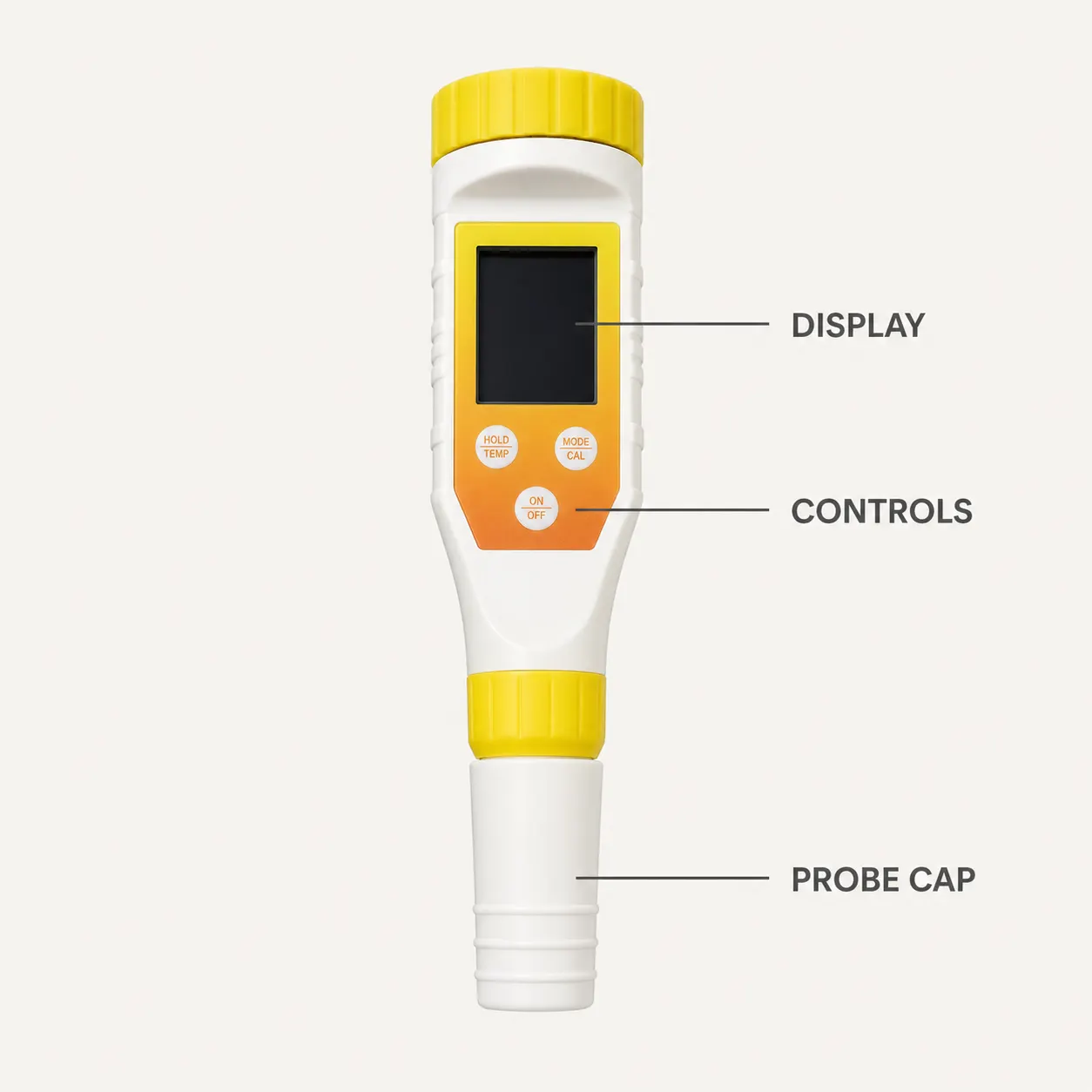
The current Waterquali page describes the YY-1066C as a water quality rapid analyser and names pH, total hardness and salinity as test items. That is enough to identify a possible fit for comparing tank water, tap water or prepared water where those readings matter. It is not enough to claim that the meter covers the full aquarium nitrogen cycle.
OATA advises freshwater fishkeepers to test relevant water quality, including ammonia, nitrite, nitrate and pH, and to take samples from the aquarium rather than the filter. Use that care guidance to define the wider routine. The product page does not state that this meter measures ammonia, nitrite or nitrate.
| Documented point | Useful buying meaning | Not established |
|---|---|---|
| pH | One listed water-quality reading | Accuracy, range and aquarium target |
| Total hardness | One listed mineral-related reading | Species-specific suitability or units |
| Salinity | One listed salt-related reading | Marine or brackish compatibility |
| LR44 x4 | Listed power supply | Runtime, battery life and low-battery behaviour |
Compare samples without chasing a number
A useful home routine compares like with like. Label the sample as tank water, tap water, conditioned water or a prepared mix, then record the source and date before reading it. OATA's freshwater guidance supports regular testing and consistent sampling; it does not validate the YY-1066C's accuracy or calibration.
If a reading surprises you, repeat the sample and check that the question is within the three named test areas. Do not respond to an unexpected pH, hardness or salinity value by changing every aquarium variable at once. A measured comparison is more useful when only one planned change follows it.
- Write down the aquarium decision and whether it depends on pH, total hardness or salinity.
- Collect and label the relevant water sample without mixing tank and source water.
- Use the product's instructions, if supplied, and keep the reading conditions consistent.
- Record the result, date, sample source and any recent water change.
- Use a separate test or aquatic advice when the question is ammonia, nitrite, nitrate, disease or another unlisted issue.
Do not turn a meter into a fish-health guarantee
A digital display can look more decisive than a colour chart, but the product page does not publish accuracy, calibration, range or resolution. It also does not claim that a reading diagnoses disease, confirms a cycled filter or guarantees that fish or shrimp will remain healthy.
If livestock is gasping, injured, dying or showing a sudden change, use the meter only if its listed readings are relevant and seek appropriate aquatic help. OATA's care guidance supports a broader water-testing routine, so a pH, hardness or salinity number should be interpreted alongside the species, system and other required tests.
Limits and checks before buying
Manufacturer does not specify accuracy, calibration method, measurement ranges, resolution, sample method, aquarium compatibility, units, certification or fish-health outcome on the current product page. It also does not establish that the tester measures every parameter a fishkeeper may need.
Choose it when the listed pH, total hardness and salinity readings are genuinely part of your routine and four LR44 cells are acceptable. If the purchase depends on a published tolerance, a specific species range, complete cycling evidence or a diagnostic conclusion, ask for written documentation or choose a better-documented test.
Related guides and product details
Choose the meter for its documented three reading areas, then keep aquarium welfare decisions tied to the wider test routine and species guidance. Read Digital pH Hardness Salinity Meter: What It Covers for related guidance. Read Fish Tank pH Tester UK: Check the Wider Water Routine for related guidance. Review the documented specification on the YY-1066C 7-in-1 Water Quality Tester product page before ordering.
Sources and safety context
- Supports the YY-1066C identity, rapid-analyser description, pH, total hardness, salinity and four LR44 cells. Current Waterquali product page.
- Supports broader aquarium testing and careful sampling; it does not certify this meter. How to test water quality in your freshwater tank or aquarium.